
San Diego County 72 Hour Status
San Diego County does not appear to publish a separate official public 72-hour jail release list in the Sheriff sources reviewed for San Diego County. The Sheriff provides the Who's In Jail lookup, the Jail Population Report, facility pages, VINE registration, and records request channels. The live lookup can be useful near a custody event, but it is not presented as a rolling three-day list of San Diego County released inmates.
The three-day window still matters. A person released on a Friday evening, moved after a court hearing, or processed during a holiday may not be easy to verify by a same-day search. In that period, the person may have dropped from the live roster, the court minutes may be newly updated, a VINE notice may have gone out, or Records & ID may be the better source for a formal booking and release record.
Three-day check: San Diego's public lookup includes a warning that displayed release dates may be inaccurate during recalculation, so a 72-hour check should pair online search with agency confirmation.
Check San Diego County Releases
Use a different workflow for 72 hours than for an expected release today. The goal is not just to see whether a live roster still has the name. The goal is to reconstruct what changed during the short after-release period: Was the person released to the community, placed on County Parole, sent to alternative custody, transferred to CDCR, moved to federal or immigration custody, or ordered to report to supervision?
- Search Who's In Jail first if the release may be recent enough for the active booking record to remain searchable.
- If the person is no longer listed, call the facility information line at (619) 409-5000 or Records & ID at 858-974-2110 for the formal record path.
- Search San Diego Superior Court's online case index for new minutes, a disposition, a sentence, a dismissal, bail activity, or a transfer order.
- Check VINE only if registration existed before the custody change or the person remains searchable for notification setup.
- If the release was actually a transfer, use CDCR CIRIS, BOP, ICE ODLS, or the receiving agency instead of treating the county release as final.
For same-day pickup or a release expected within hours, use the 24-hour release list workflow because it gives more weight to facility confirmation and immediate roster status.
San Diego County 72 Hour Fields
Since no official rolling 72-hour feed was found, the table below tracks the record fields that usually matter during the three-day confirmation window. These fields may come from the live Sheriff record before it drops, the booking and release record, the court case, VINE notice history, or a supervision source.
| Field | Why It Matters in 72 Hours |
|---|---|
| Booking number | Gives Records & ID and the court a precise way to match the jail event. |
| Release date or time | Helps separate a current release from a transfer, stale roster entry, or scheduled date. |
| Release reason | Shows whether the exit was bail, court order, time served, alternative custody, or transfer. |
| Releasing facility | Identifies which Sheriff facility or city booking source should be contacted. |
| Court case location | Points to Central, North County, South Bay, or another branch for criminal case records. |
| Supervision or receiving agency | Shows whether probation, PRCS, CDCR parole, ICE, BOP, or another agency should be checked next. |
San Diego County Weekend Releases
The 72-hour window is most useful when a release happened outside a normal weekday records rhythm. Records & ID business hours are Monday through Friday, 8:00 a.m. to 4:30 p.m., with a noon lunch closure and weekend and holiday closures. A jail release may occur when the records office is not open, while the online lookup may be stale, offline for maintenance, or missing the person because the custody event has already posted.
During that gap, compare sources rather than waiting on one page to become definitive. A VINE alert may confirm a release, pending release, or transfer if registration was in place. A court minute order may show why custody ended. A probation or PRCS contact may show that the person is out of jail but still under county supervision. A CDCR or BOP record may show that the county release was a transfer to another custody system.
The San Diego Superior Court copy process is useful after a weekend because criminal case documents may need to be obtained at the courthouse where the matter was heard or by mailed copy request. The court file copy page is the relevant path when the online index gives the branch and case number.
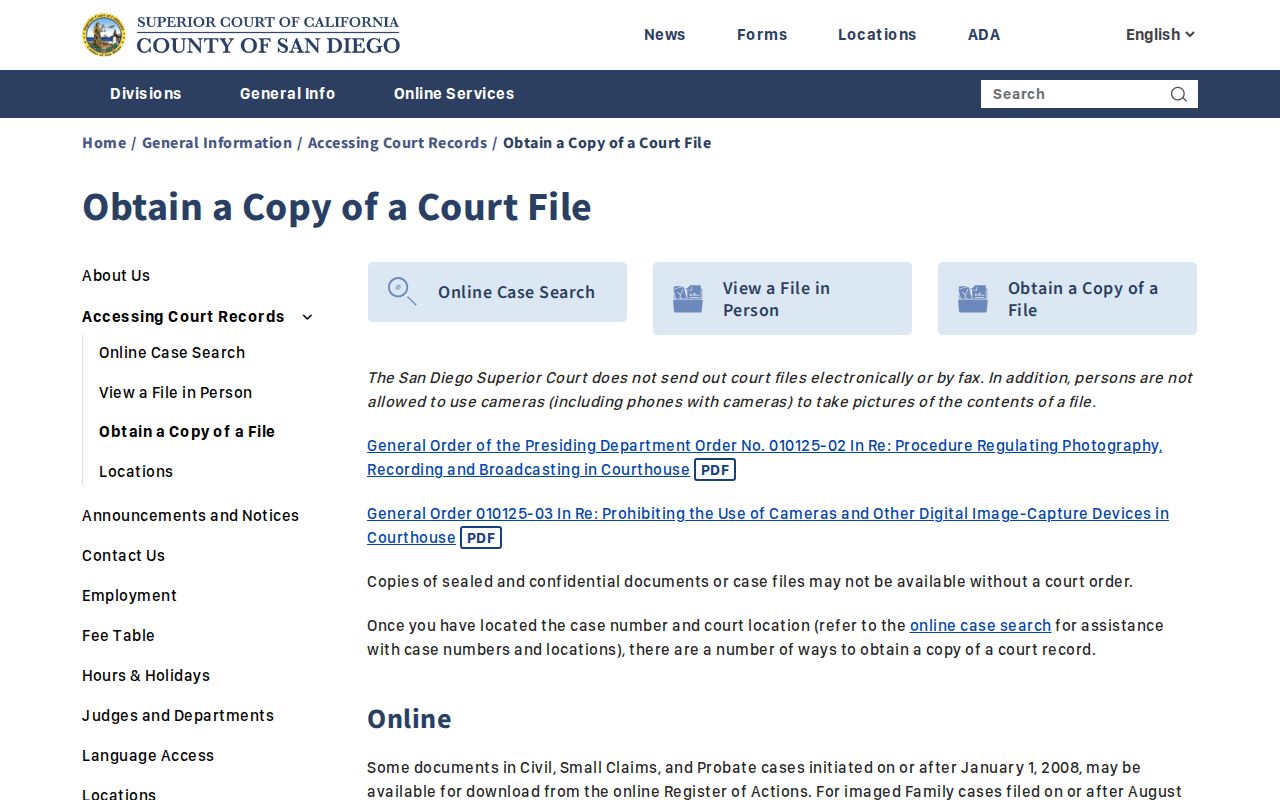
That court channel helps explain releases that the jail lookup no longer shows, especially when a court order, sentence credit, plea, or dismissal caused the custody change.
San Diego County Roster Quirks
San Diego's most important roster quirk is the warning on release dates in Who's In Jail. The research found that the page states release dates currently reflected may not be accurate because records are being recalculated and tells users to contact the facility for confirmation. That wording is more specific than a generic statement that online data can lag.
A three-day search should therefore treat the live roster as one source among several. If the person still appears, capture the booking number and facility and then confirm. If the person is absent, do not assume the release was to the community. Check for a transfer, a court update, a name mismatch, or a separate custody system. In San Diego County, that other system may be CDCR, BOP, ICE, Chula Vista temporary custody, County Parole, PRCS, or mandatory supervision.
Note: a 72-hour release check is a short records audit, not proof that no later correction, court order, or transfer record exists.
San Diego County Records Fallback
When the 72-hour window has passed or the live lookup no longer shows the person, Records & ID becomes the practical jail record source. The Sheriff's request materials identify Records & ID as the division that processes arrest and booking records, identifies in-custody inmates, maintains Sheriff crime and arrest reports, and maintains county-wide warrant and temporary restraining order repositories. For release questions, ask for the booking and release record tied to the booking number or case.
Crime, arrest, and accident report copies can be requested through the Sheriff's Public Records Center, through the station or substation that wrote the report or responded, or by Service Request Form to Records & ID. Research notes a $20.00 fee for crime, arrest, or accident report copies, with first-copy exceptions for certain victims or representatives. Local criminal history requests are narrower and may require valid government photo identification with a 3 to 10 business day processing goal.
| Record Channel | Use After 72 Hours |
|---|---|
| Records & ID | Formal Sheriff booking and release questions after the live lookup changes. |
| San Diego Superior Court | Release authority, case disposition, sentence, bail activity, and court branch. |
| VINE | Notification history when registration was completed before release or transfer. |
| Probation or PRCS | Community supervision after jail or state-prison release. |
San Diego County Release or Transfer
A person leaving San Diego County Sheriff's custody may not be done with custody or supervision. Some releases lead to formal probation, mandatory supervision, PRCS, County Parole, Home Detention, or another CPAC alternative. Others are transfers to CDCR, federal custody, ICE, another county, or a different Sheriff facility. The short three-day window is often where those distinctions become clear.
For state-prison cases, search California CIRIS and use CDCR or BPH resources when the person was sentenced to CDCR or housed at Richard J. Donovan. For federal custody, use the BOP Inmate Locator or federal court records when the person was at MCC San Diego or moved into BOP custody. For immigration custody, ICE ODLS and the Otay Mesa Detention Center contact path are the relevant sources. A county release reason and receiving-agency field can prevent a mistaken conclusion.
- Released from Sheriff custody
- The county jail hold ended, but another record may show supervision, court duties, or transfer.
- Transferred
- The person left one custody system for another agency or facility and may not be in the community.
- Discharged
- A custody or supervision term ended, depending on the agency and record context.
San Diego County Court Updates
San Diego Superior Court records often explain what the jail record only signals. The online case search can provide case title, case number, case location, case type, filing date, and parties. Those fields help locate the branch and file after the Sheriff's current custody result is gone. Criminal case documents may not be available in the same online manner as some civil records, so the courthouse and mailed copy process still matters.
Supervision records may also answer the next question after a release. San Diego County Probation handles formal probation, PRCS, and mandatory supervision. Adult Records can be used to contact a probation officer or find out where to report. If a person was released from state prison to PRCS, the county's Community Transition Center may be part of the reporting path. Those details belong in the 72-hour review because they show what happens after the jail door closes.
Note: sealed, confidential, juvenile, medical, victim, or investigatory material may be withheld even when the basic release event is a public-record issue.
Public Record Search
Sponsored Results